
Home · Cleaning · Appliance Cleaning
How to Clean a Washing Machine
Clean your washing machine by emptying the drum, washing the detergent drawer, wiping the rubber seal, running a hot cleaning cycle, and drying the door area.
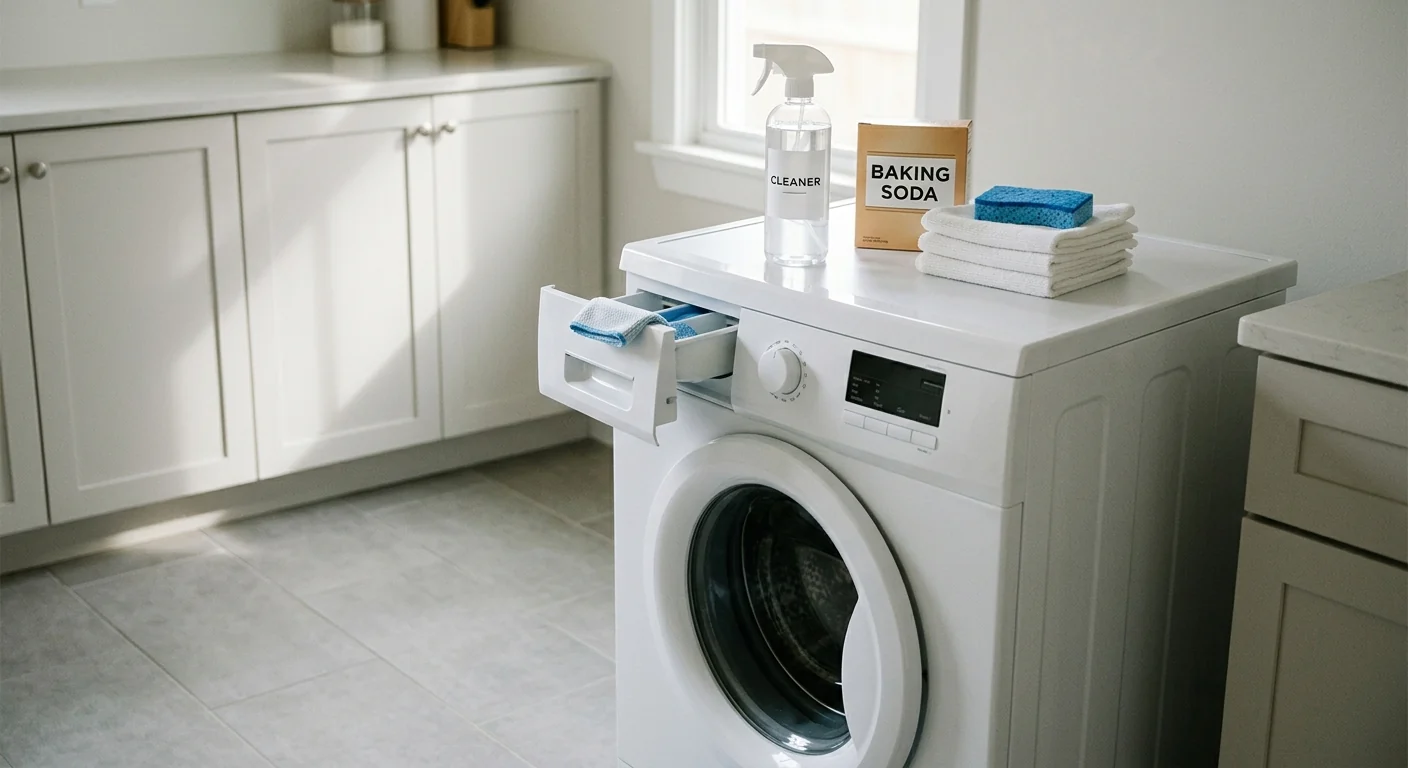
To clean a washing machine, empty the drum, remove and rinse the detergent drawer, wipe the rubber seal, run a hot cleaning cycle with a washing machine cleaner, and leave the door and drawer open so the machine can dry.
- Time needed30–60 minutes
- DifficultyEasy
- Works onFront-load and top-load washing machines
- Last checkedJune 2026
Before you start
A washing machine can look clean from the outside while moisture, lint, detergent residue, and odor collect inside the drum, rubber seal, detergent drawer, and drain area. A quick maintenance clean helps keep laundry smelling fresh and reduces buildup inside the appliance.
Before you begin, check your washing machine manual. Some models have a dedicated drum clean, tub clean, hygiene, or self-clean program. If your machine has that program, use it instead of guessing a cycle.
Never mix bleach with vinegar, ammonia, disinfectants, or other cleaning products. Use only one cleaner at a time, follow the product label, and ventilate the room while cleaning.
What you need
You only need a few basic items:
- a washing machine cleaner tablet or liquid cleaner suitable for your appliance;
- a soft cloth or sponge;
- an old toothbrush or small soft brush;
- warm water;
- gloves, especially if you use a chemical cleaner;
- a dry towel for the rubber seal, door, and drawer area.
For routine cleaning, a dedicated washing machine cleaner is the simplest option because the dosage and instructions are written for appliances. If you use any household alternative, check the machine manual first.
Step-by-step guide
-
Empty the drum
Remove all clothes from the drum. Check the inside carefully for socks, small items, tissues, coins, hairpins, and lint. If anything is trapped around the door or seal, remove it before starting the cleaning cycle.
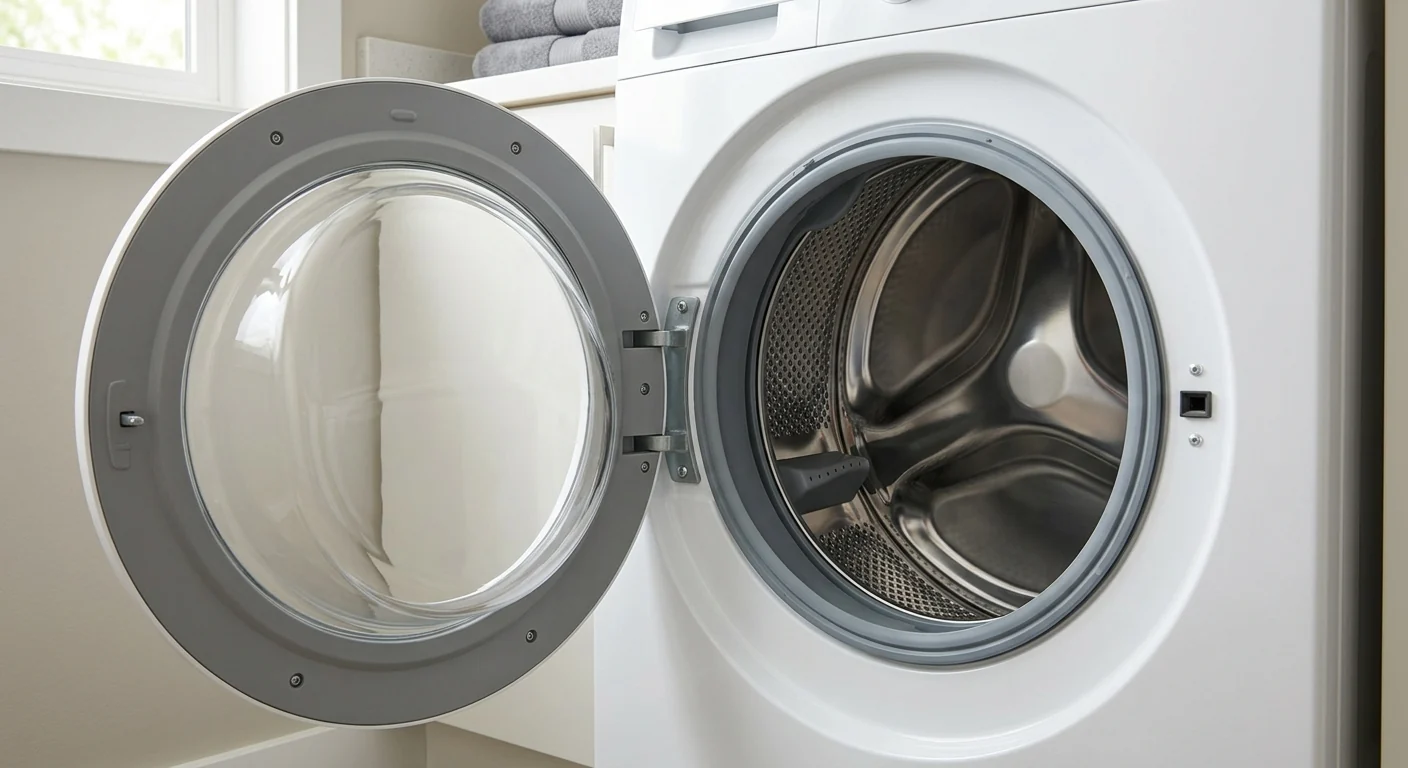
Start with an empty drum before running a cleaning cycle. -
Clean the detergent drawer
Pull out the detergent drawer. Most drawers have a small release tab that lets you remove them completely. Rinse the drawer under warm water, scrub away sticky residue with a soft brush, and dry it before putting it back.
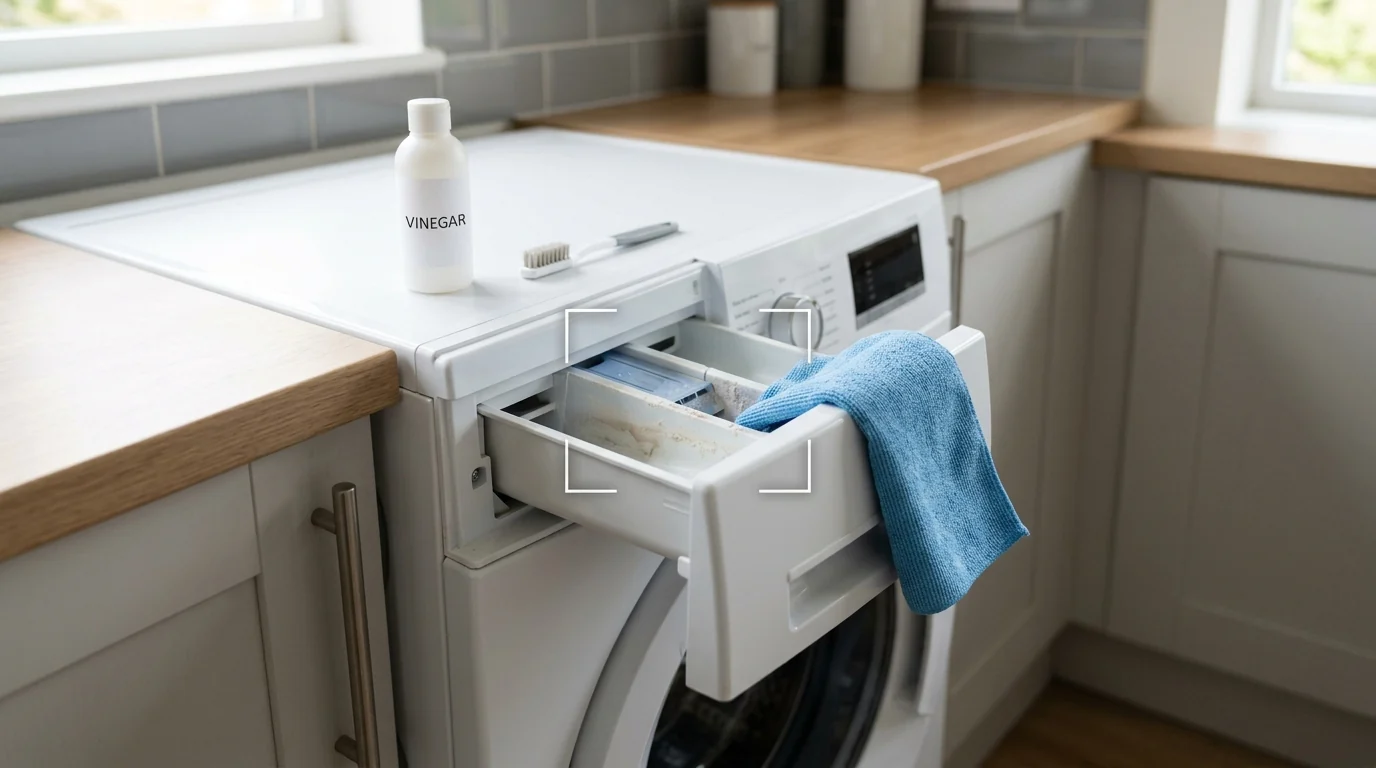
Remove the detergent drawer and rinse away detergent residue with warm water. -
Wipe the rubber seal
For a front-load washing machine, gently pull back the rubber seal around the door and wipe inside the folds. Remove lint, hair, and visible residue. Dry the area with a towel when you are finished.
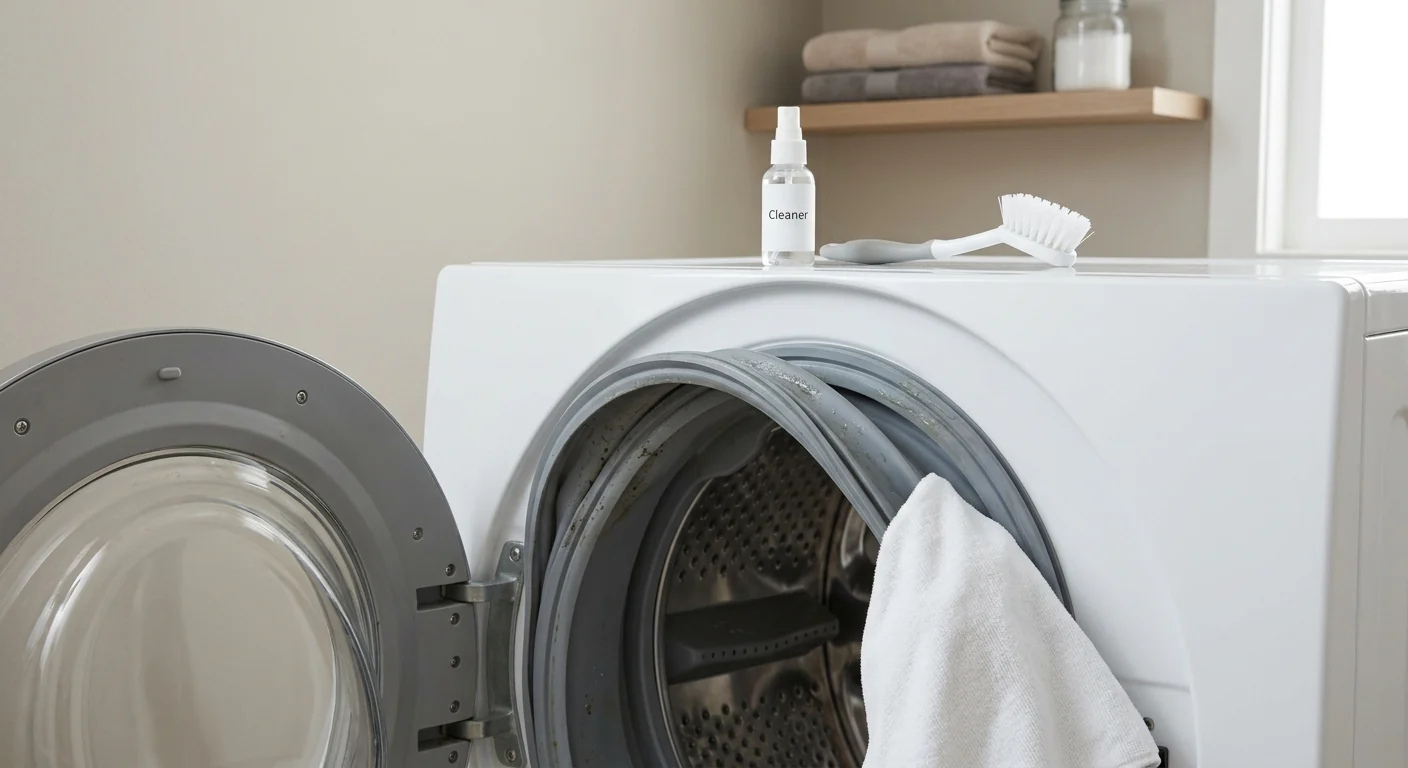
The rubber seal often collects moisture, lint, hair, and residue. -
Run a hot cleaning cycle
Add the washing machine cleaner according to the label. Choose the drum clean, tub clean, hygiene, or hottest suitable cycle available on your machine. Run the cycle with an empty drum.
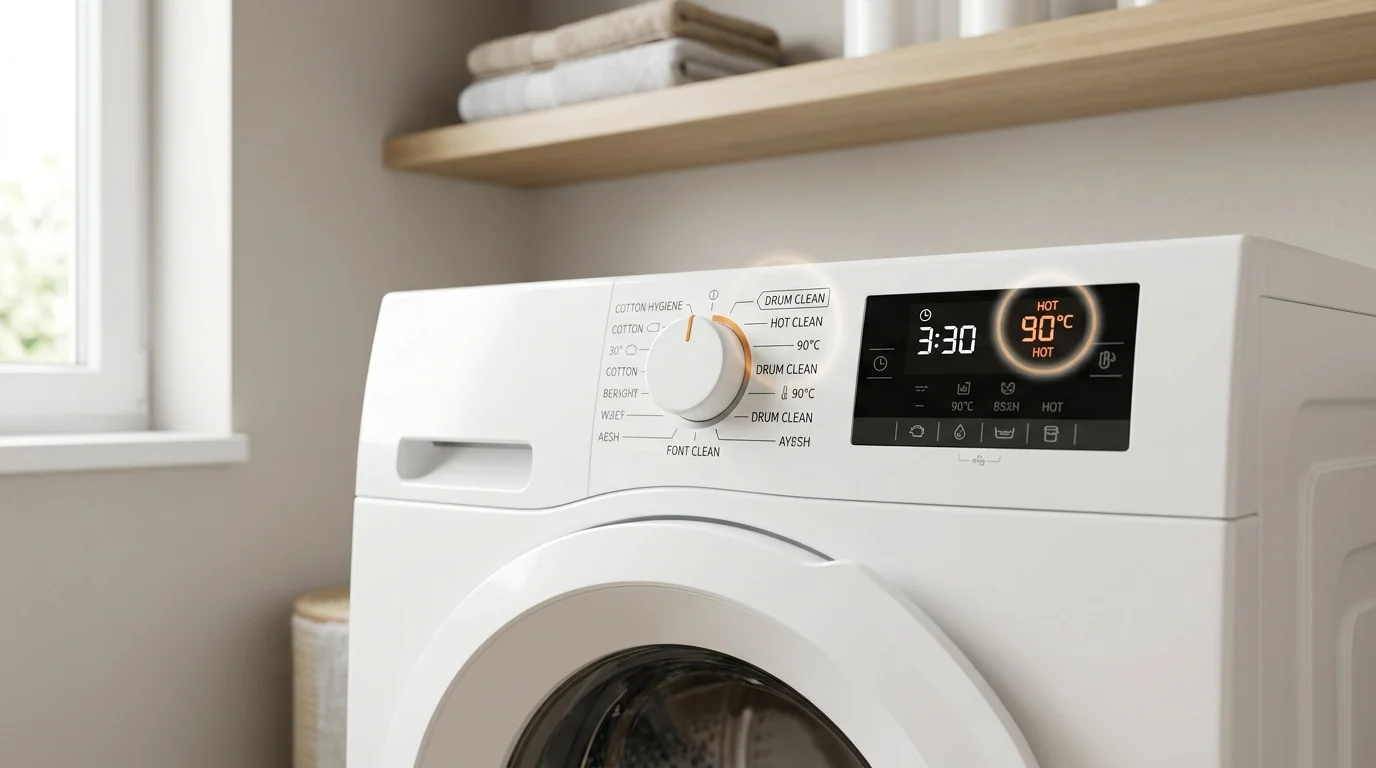
Run an empty hot cycle or the dedicated drum clean program, following the cleaner label. -
Dry the door, seal, and drawer area
When the cycle finishes, wipe the door glass, rubber seal, and detergent drawer area with a dry cloth. Leave the door and detergent drawer slightly open so remaining moisture can evaporate.
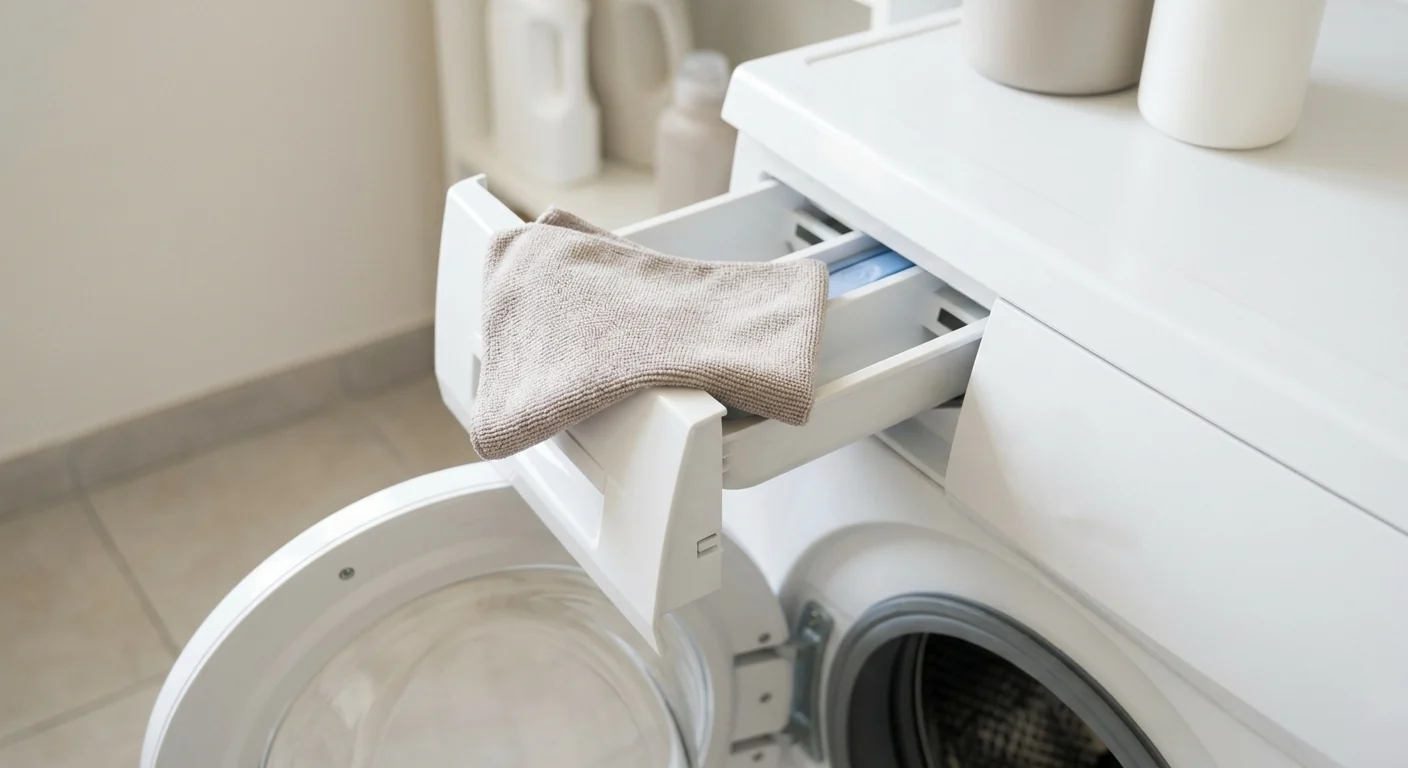
Leave the door and detergent drawer slightly open so moisture can evaporate.
How often to clean it
For normal household use, clean the washing machine about once a month. Clean it sooner if laundry smells musty, the rubber seal has visible residue, the detergent drawer feels slimy, or the drum smells unpleasant after a wash.
You can reduce odor by using the correct amount of detergent, avoiding constant low-temperature washes, removing wet laundry promptly, and letting the door area dry after each use.
Common problems
| Problem | What to try |
|---|---|
| The washing machine still smells | Clean the rubber seal again, remove lint and hair, and run another hot maintenance cycle with a washing machine cleaner. |
| Water stays in the detergent drawer | Remove the drawer, rinse it under warm water, clean the small openings with a soft brush, and dry it before reinserting it. |
| Mold appears on the rubber seal | Wipe the seal after each wash, remove wet laundry quickly, and leave the door slightly open so moisture can escape. |
| Clothes smell after washing | Use less detergent, avoid overloading the drum, and run a maintenance wash once a month. |
| The machine has a drain smell | Check the appliance manual for filter cleaning instructions. If the smell continues, check the drain hose and contact a technician if needed. |
FAQ
How often should I clean my washing machine?
For normal household use, clean it about once a month or whenever the drum, rubber seal, detergent drawer, or laundry starts to smell musty.
Can I use vinegar to clean a washing machine?
Use only one cleaning product at a time and follow your appliance manual. Do not mix vinegar with bleach or other disinfectants.
Why does my washing machine smell after washing?
Odor usually comes from trapped moisture, detergent residue, lint, hair, or mold around the rubber seal, detergent drawer, drain area, or drum.
Should I leave the washing machine door open?
Yes, if it is safe in your home. Leaving the door and detergent drawer slightly open helps moisture evaporate after washing.
Do top-load washing machines need cleaning too?
Yes. Top-load machines do not usually have the same front rubber seal, but the drum, detergent dispenser, lid area, and filter or drain area can still collect residue.